Here are four practical paths — from replacing one weak blade, to refreshing a tired NiMH pack, to full replacement, to the ultimate sodium-ion upgrade.
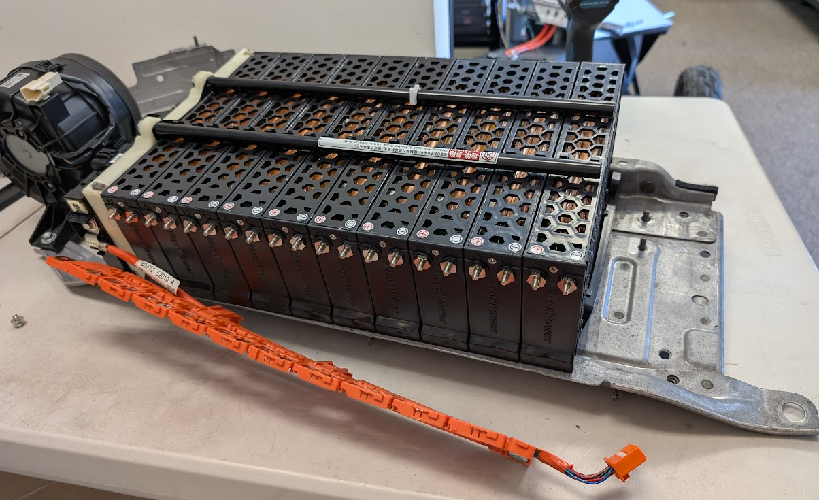
If your hybrid battery is showing error code other than P0A80, chances are one or multiple battery blades need replacement.
The bad battery blade(s) can be identified by running a full battery test or life expectancy test. Repair shops often start around $500 USD for service + parts. Alternatively, you can DIY (carefully):
1) You should have basic electrical knowledge — touching + and − on a high voltage pack can cause injury or death.
2) Disconnect the orange service plug to reduce pack voltage (roughly 200V down into the ~100V range).
3) Replace with used blades of similar capacity (mAh). Don’t mix something like 3000mAh with 6500mAh.
4) Reserve half a day. Take your time and do it right.
5) PriusChat.com and YouTube guides are great resources if you get stuck.
6) After repair, drive gracefully for a couple days to let blades balance during break-in.
If you have the famous P0A80, you may be able to refresh/revive NiMH cells using a Prolong charger + discharger.
P0A80 is a warning that battery performance is bad. Life expectancy test is often under 50% capacity. Dealers and many shops only offer full replacement (often more than the car’s value).
You can refresh the pack with a Prolong charger/discharger — the process takes ~3 days. Each refresh may last 6–12 months. The more you drive, the less often you may need refresh cycles.
If you plan to keep your hybrid longer, replacing the entire pack can bring years of worry-free driving.
Green Bean Battery focuses on reliable reconditioned hybrid packs and a proprietary reconditioning process, enabling them to offer a Lifetime Warranty and strong customer service.
If you want to upgrade and future-proof your Toyota/Lexus hybrid, this is the “next level” solution.
After years of research, development, and testing, Dr. Prius presents the Sodium-ion Upgrade solution. It directly replaces the old NiMH pack and brings benefits like:
1) Half the weight (stock NiMH ~80 lbs; sodium pack under ~40 lbs).
2) More power (up to ~400A peak vs ~100A stock).
3) Better fuel economy + improved EV behavior by maintaining optimal voltage.
4) High level of safety tested across extreme conditions (sub-zero, humidity, desert heat).
5) Toxic free vs NiMH chemistry emissions concerns.
6) Affordability — sodium is abundant, and savings are passed to customers.